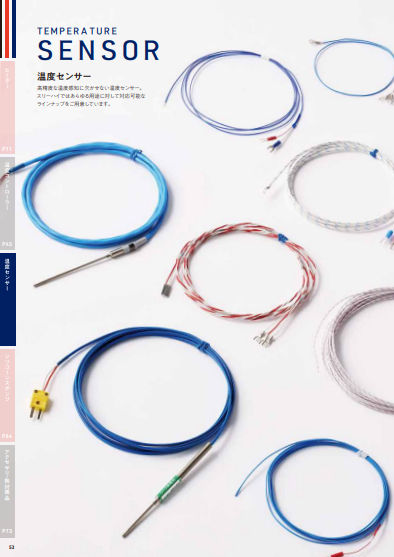
The answer is always found on the scene.
We are committed to on-site work .
We will solve the temperature problem .
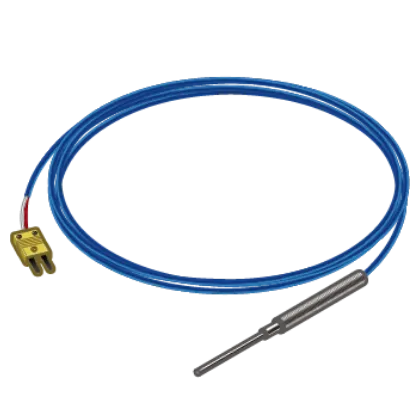
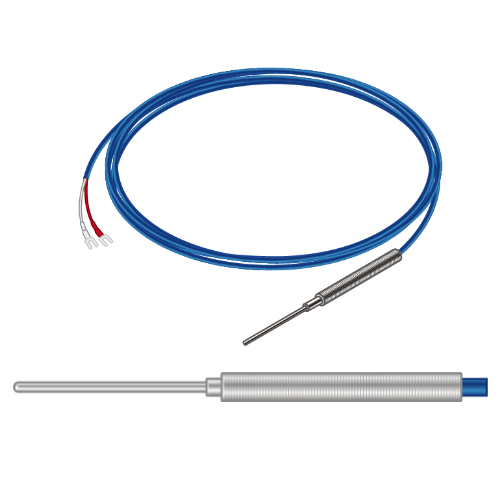
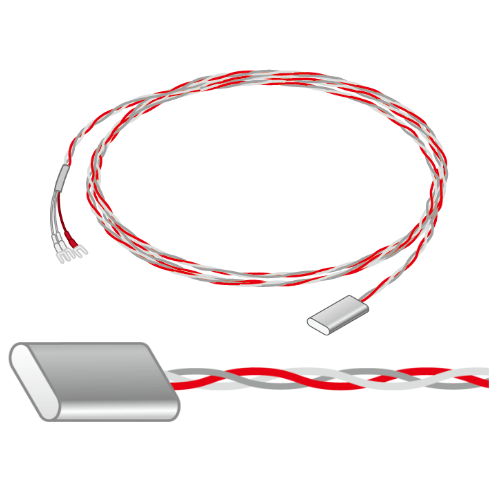 Temperature sensor

Suitable for detecting flat surfaces. With heat resistance up to 200°C and high durability, it enables stable sensing.
[Features]
■ Platinum resistance thermometers are a type of "resistance thermometer" that utilizes the property that the electrical resistance of a metal changes in response to temperature changes.
■ This sensor uses platinum (Pt), which has excellent temperature characteristics and minimal changes over time, as the temperature sensing element.
■ Operating temperature limit: 200℃, tolerance: Class A, 3-wire type.
[Application]
■ Temperature sensor (sold separately) compatible with the monoOne®-120/200 temperature controller. Can also be used with other temperature control devices.
*This product is designed to be used with a temperature controller (sold separately).


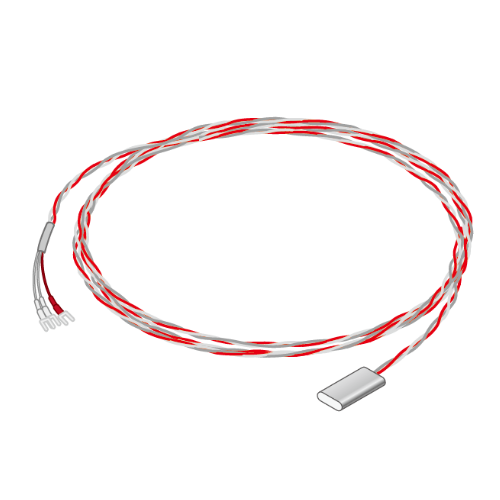
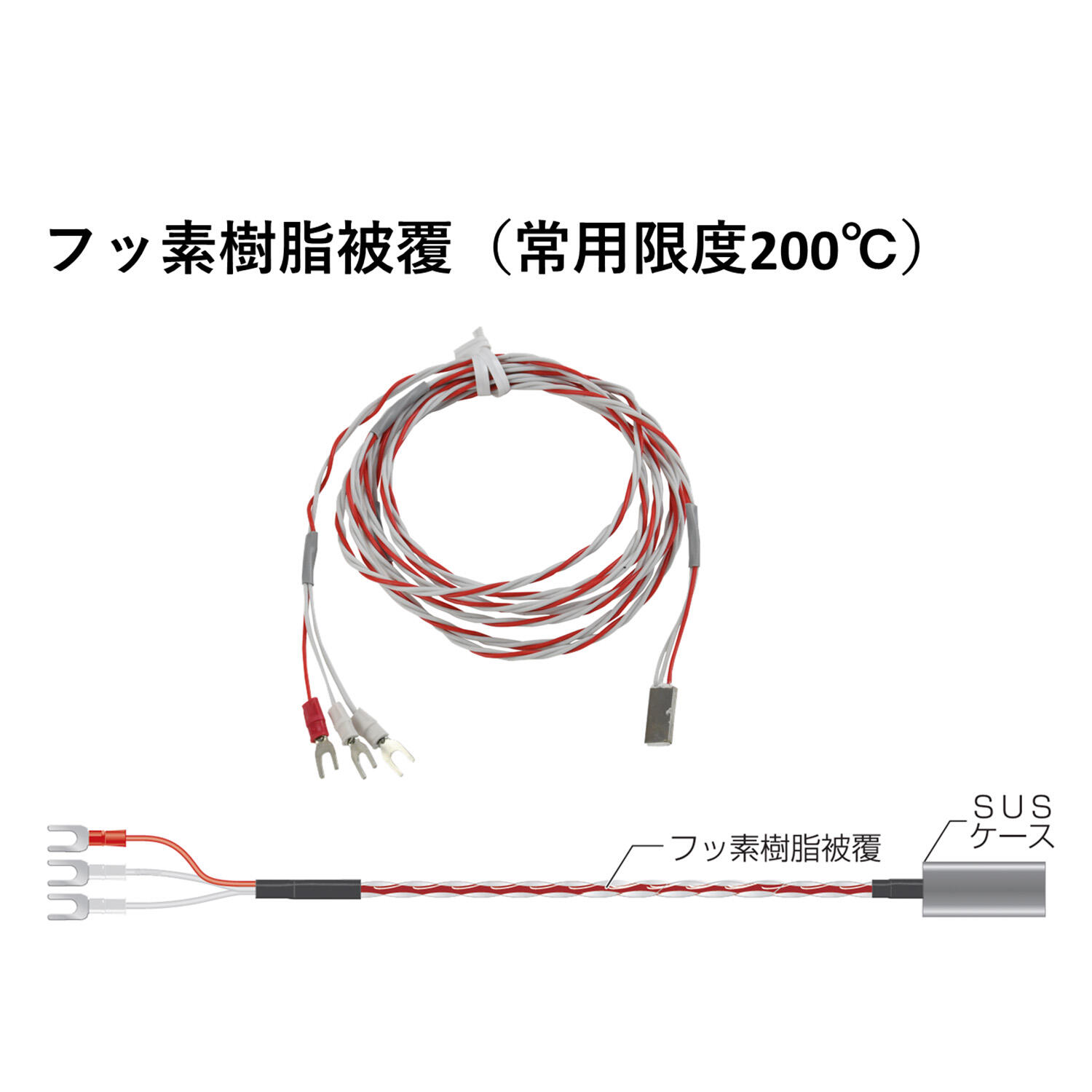 Order your platinum resistance thermometer (Pt100Ω) stick type here.
There are reasons why many companies, educational institutions, and research organizations choose us.
That's because they are passionate professionals who always go to the site and find solutions .
From single-item production to mass production, we can help you solve your heat-related manufacturing challenges.

The answer is always found on the scene.
We are committed to on-site work .
We will solve the temperature problem .
This sensor is recommended if the area to be detected is a flat surface. With Class A accuracy and high durability, it provides stable sensing.
 Principle of Platinum Resistance Thermometer
A "platinum resistance thermometer" is a type of resistance thermometer that utilizes the property that the electrical resistance of a metal changes with temperature. It is a sensor that uses platinum (Pt), which has good temperature characteristics and little change over time, as the temperature sensing element.
When reading the specifications of control equipment and measuring instruments that use "platinum resistance thermometers" (sometimes abbreviated as "resistance thermometers"), you will find "Pt100" and "JPt100" written in the input fields.
"Pt" stands for platinum, and "100" comes from the fact that the resistance value at 0°C is "100Ω". The current JIS standard (C1604-1997) specifies Pt (new JIS) and abolishes JPt (old JIS), which is widely used in Japan. However, both are still widely used, and since Pt and JPt have different characteristics, it is necessary to match them with the input specifications of the temperature controller itself.
Generally, platinum resistance thermometers are used for low-temperature measurements and offer better accuracy compared to thermocouples. However, they are unsuitable for applications requiring fast response times or for measuring surfaces and minute areas.
This is because platinum resistance thermometers, as resistive elements, have a considerable volume, and therefore take longer to reach thermal equilibrium compared to thermocouple temperature sensors.
Please read this carefully and follow the instructions to ensure safe use.
*Ignoring this warning and mishandling the product may result in death or serious injury.
Ignoring this warning and mishandling the product may result in injury or property damage.
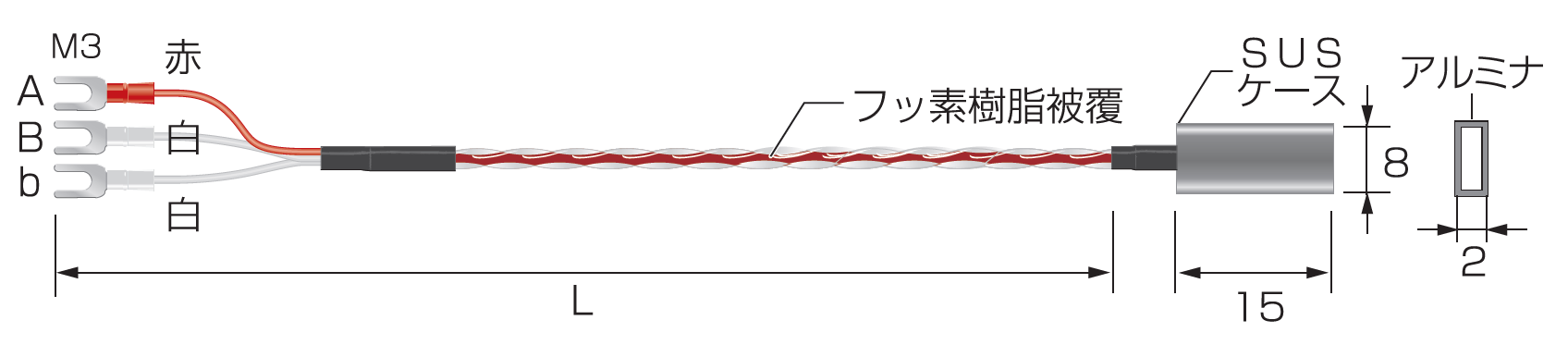
Operating temperature limit: 200°C, tolerance: Class A, 3-wire type
| Product Code | L(m) |
|---|---|
| TH-8320 | 2.0 |
*Due to the manufacturing process, slight color variations may occur, but this does not affect performance.
| 3 conductor type | In resistance thermometers, two wires are connected to one end of the resistive element and one wire to the other end to eliminate the effect of wire resistance when the lead wires are extended. All of our Pt-type temperature controllers employ this method. | ||||||
|---|---|---|---|---|---|---|---|
| Lead wire extension | For extensions, use conductors of the same diameter, material, and length for all three wires (unlike thermocouples, regular wiring materials are acceptable). Note that using wires of different lengths may prevent proper correction of wiring resistance, resulting in errors in the readings. The wiring length should be less than or equal to the input signal source resistance of the measuring instrument. | ||||||
| Insertion depth | Accurate temperature measurement is impossible unless the temperature sensing junction is positioned at the same temperature as the object being measured. When using a sheathed type or protective tube, it is necessary to insert the sensor approximately 15 times its diameter. | ||||||
| Temperature tolerance |
JIS C 1604-1997
■ Tolerance refers to the maximum permissible error in the value obtained by subtracting the measurement temperature t from the resistance value of the resistive element, which has been converted according to the standard. ■ |t| is the measurement temperature, expressed in °C, regardless of the + or - symbols. |
 2つのご注文方法
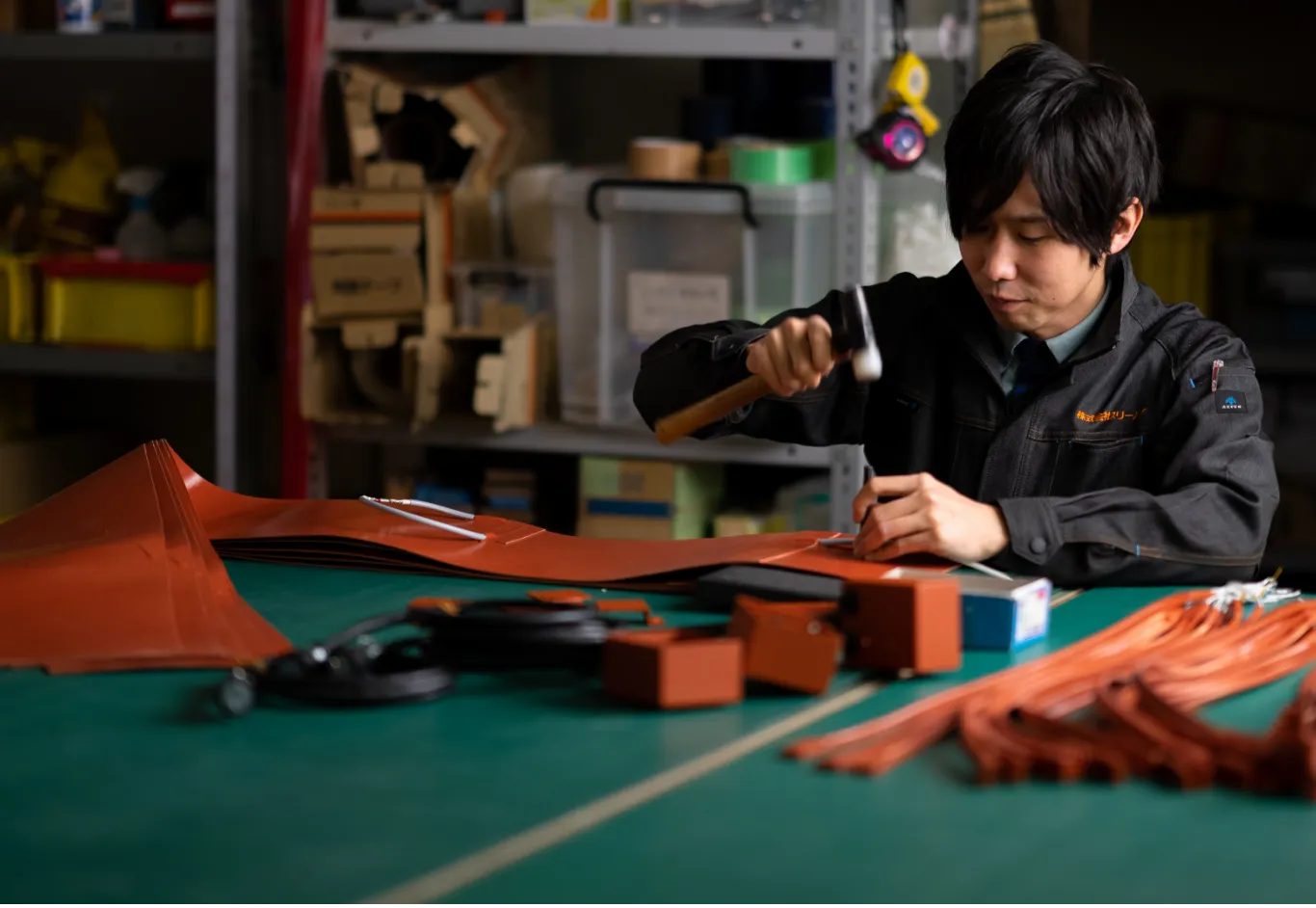

 はじめての
1つからオーダーメイド。
ご要望を高い精度で実現。

スリーハイの製品の大半はオーダーメイドのカスタマイズ製品です。お客様へのカウンセリングや現場訪問をもとに、1000種類以上あるスリーハイ製品の中から最もご希望に合う製品をご提案しています。
特注・オーダーメイドの詳細を見る お問い合わせ
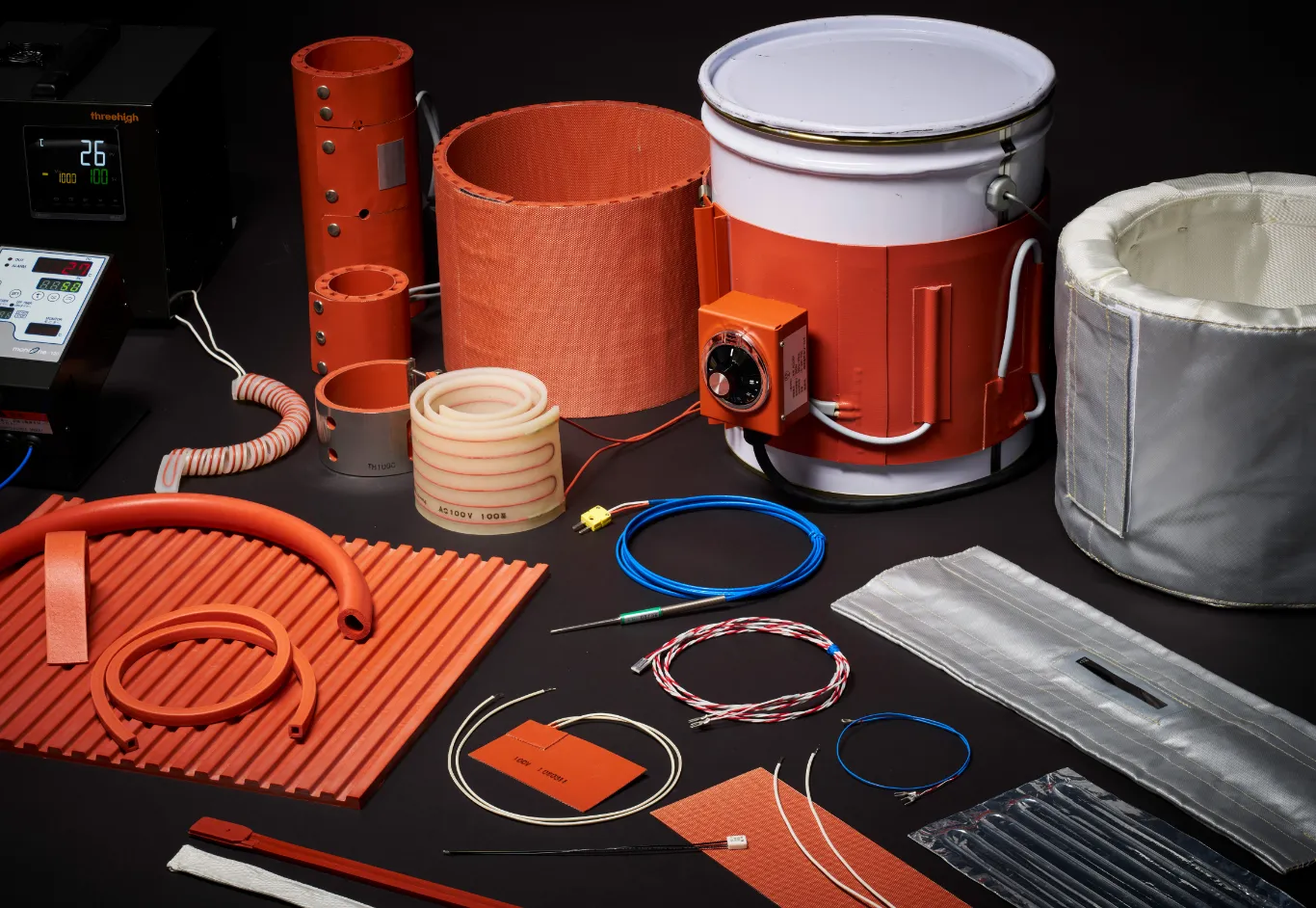

豊富な標準品の在庫を
常にご用意しています。

スリーハイではオーダーメイト製作以外にも標準品の在庫を多数ご用意しております。目的の製品が決まっている方や2度目のご注文の方はオンラインストアからご購入ください。型番からの検索も可能です。
 標準品一覧へオンラインストア
 製品名で検索
Yes, it is possible.
Many of our customers consider ordering just one item. Of course, we also handle mass production.
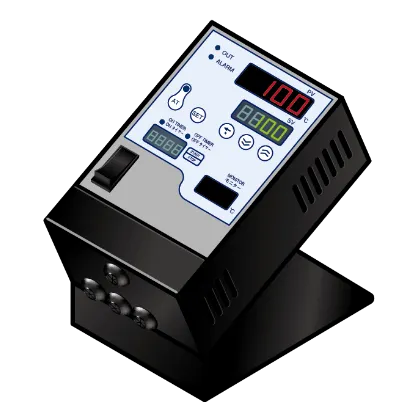
Broadly speaking, there are two types: analog (suitable for rough temperature control) and digital (suitable for high-precision temperature control). We recommend the low-cost digital models "monoOne®+Ao" and "monoOne®-120/T" (MonoOne®).
While we retain customer data, we don't usually include it. If you would like it included, please request it when placing your order.
Please Inquiry. We will check the condition to see if it can be repaired.
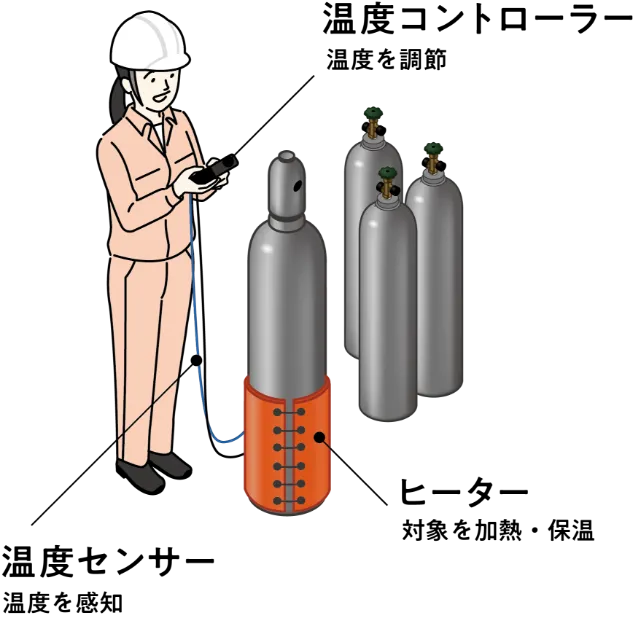
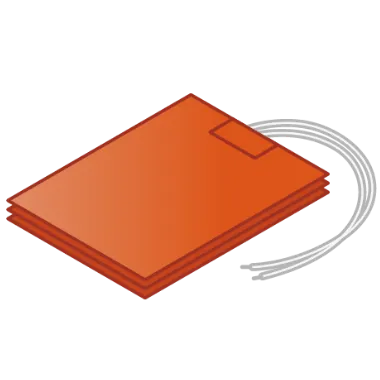
 To use the heater safely,
In an environment where earthquake resistance, flexibility, and long lifespan are required.
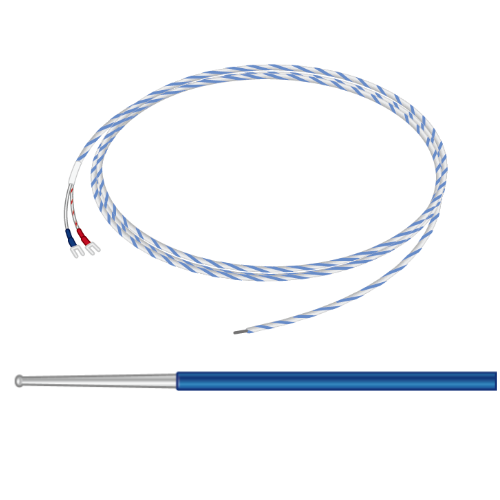
For environments requiring high heat resistance of 200°C to 250°C
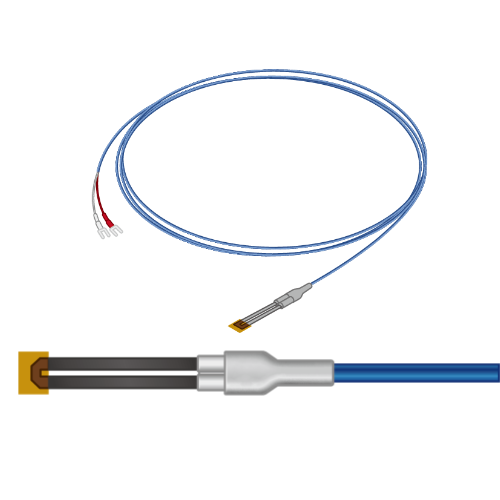
Excellent thermal response! Ideal for measuring surface temperature.
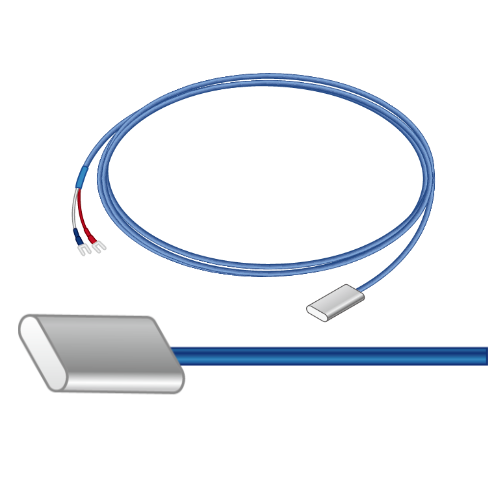
High durability with alumina and stainless steel protection! For measuring flat surfaces.
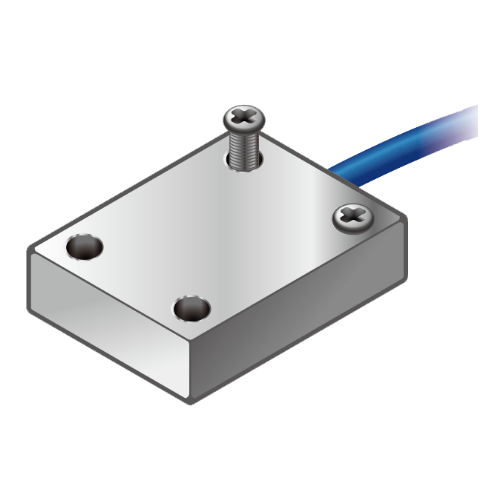
Easy to attach and detach with screw fastening! For measuring flat surfaces.
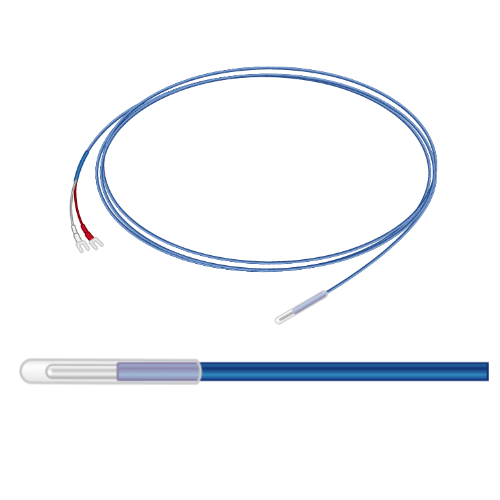
Waterproof! For measuring the temperature of liquids such as water.
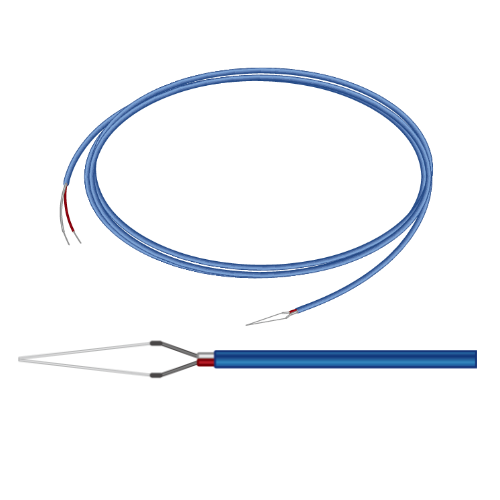
Ultra-fast thermal response! For measuring extremely fine details and gas temperatures.
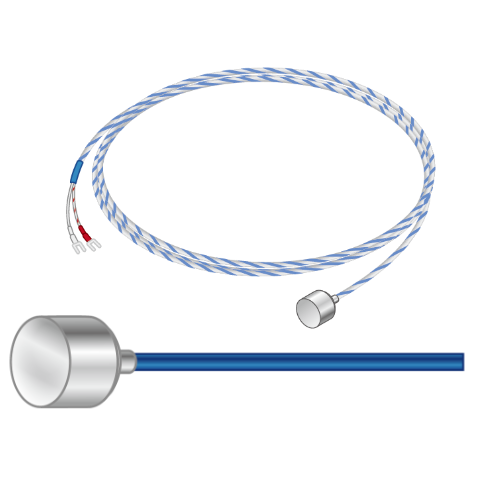
A surface temperature sensor with a magnet incorporated into the measurement contact point.

 0120-972-128