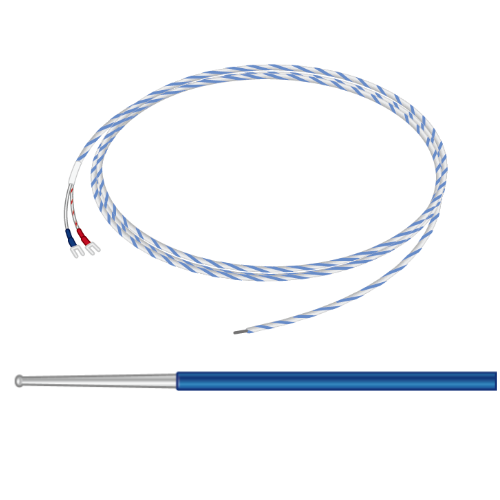
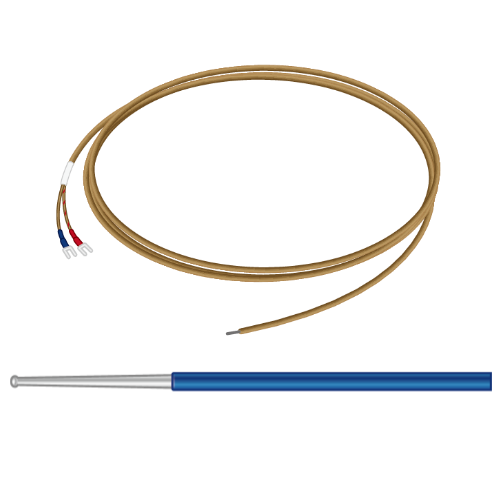
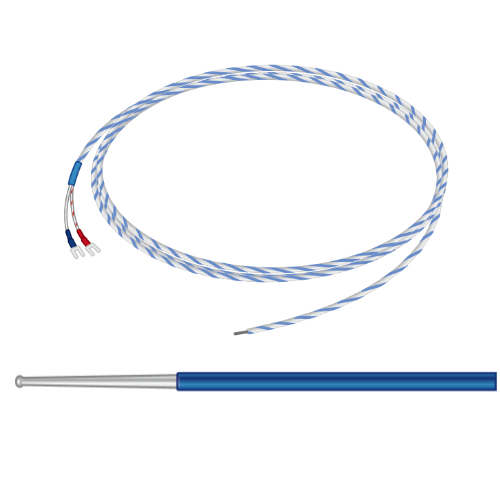
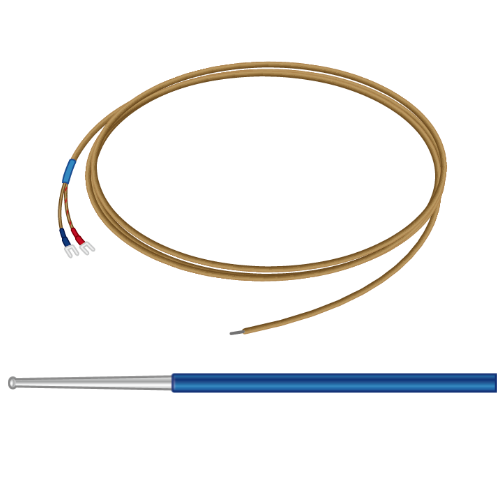
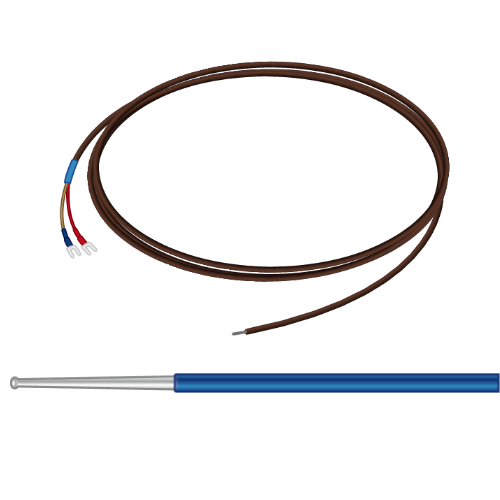
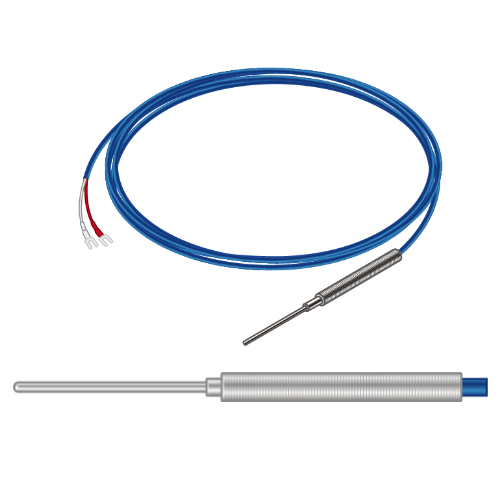
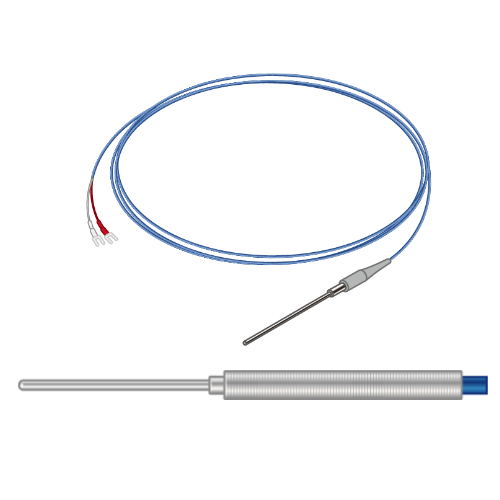
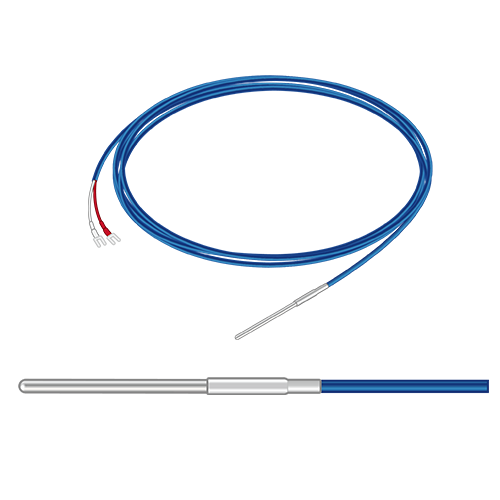
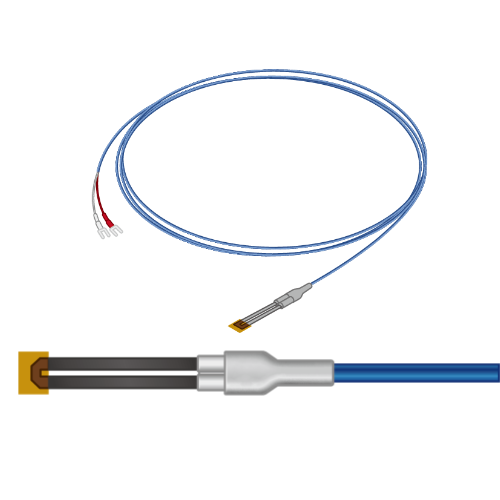
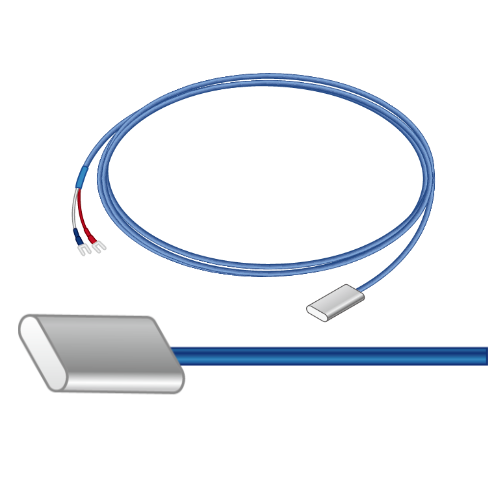
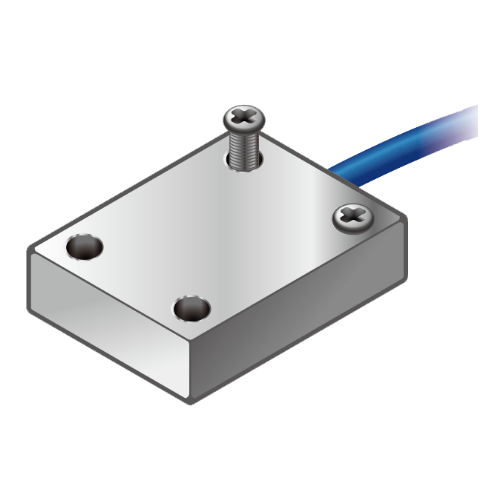
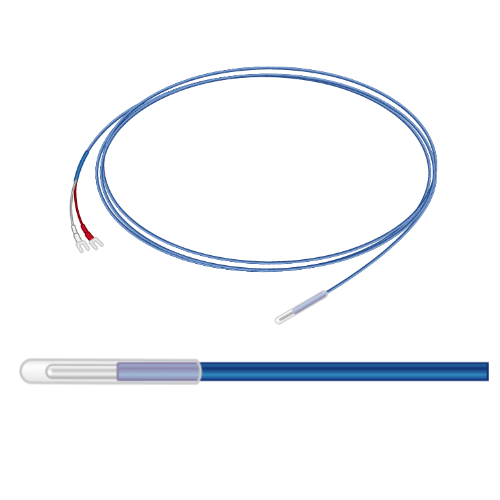
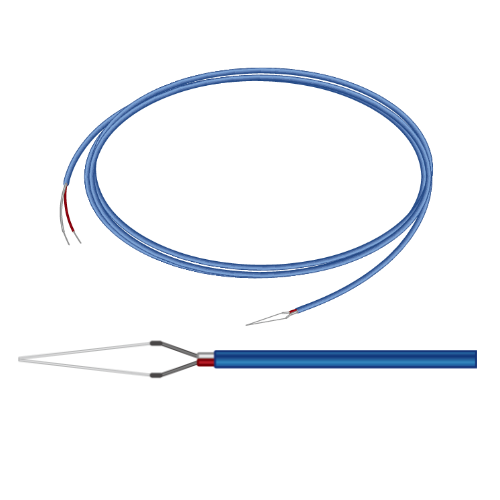
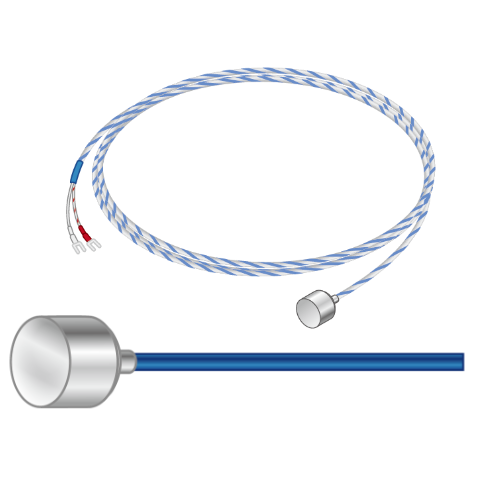
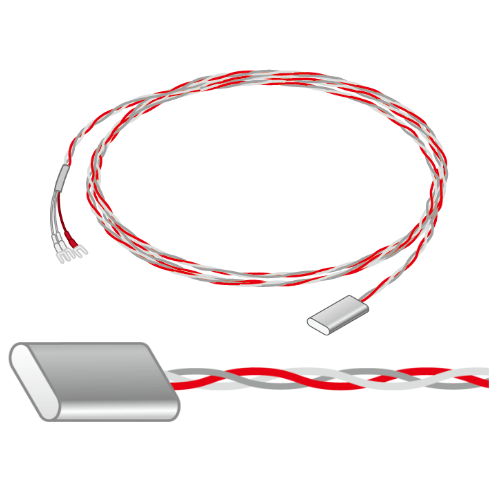
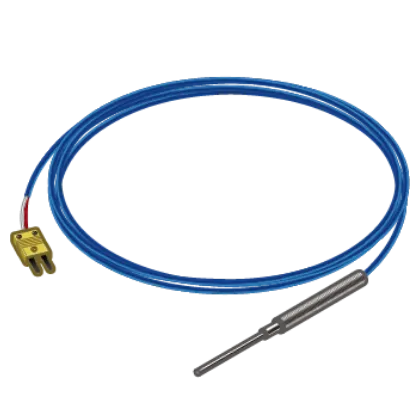
A "platinum resistance thermometer" is a type of resistance thermometer that utilizes the property that the electrical resistance of a metal changes with temperature. It is a sensor that uses platinum (Pt), which has good temperature characteristics and little change over time, as the temperature sensing element.
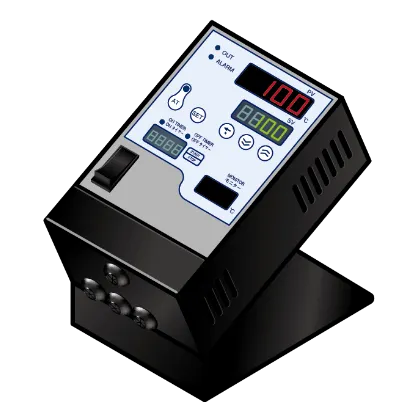
When reading the specifications of control equipment and measuring instruments that use "platinum resistance thermometers" (sometimes abbreviated as "resistance thermometers"), you will find "Pt100" and "JPt100" written in the input fields.
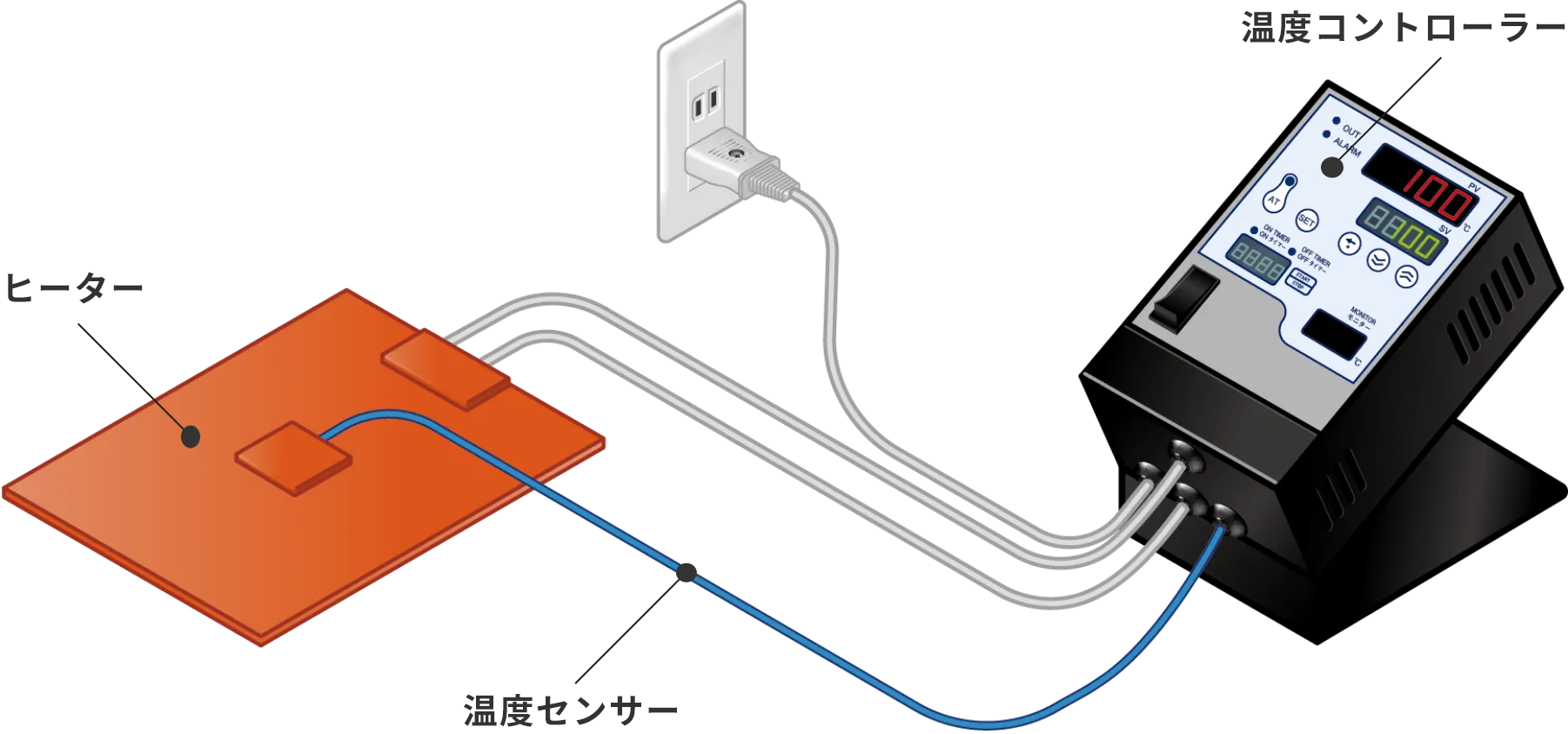
"Pt" stands for platinum, and "100" comes from the fact that the resistance value at 0°C is "100Ω". The current JIS standard (C1604-1997) specifies Pt (new JIS) and abolishes JPt (old JIS), which is widely used in Japan. However, both are still widely used, and since Pt and JPt have different characteristics, it is necessary to match them with the input specifications of the temperature controller itself.
Generally, platinum resistance thermometers are used for low-temperature measurements and offer better accuracy compared to thermocouples. However, they are unsuitable for applications requiring fast response times or for measuring surfaces and minute areas.
This is because platinum resistance thermometers, as resistive elements, have a considerable volume, and therefore take longer to reach thermal equilibrium compared to thermocouple temperature sensors.