- Examples of heater applications
Benefits of using heaters as an alternative to water baths | Achieving cost reduction and energy savings in factories
September 24, 2026
 Reona Suzuki
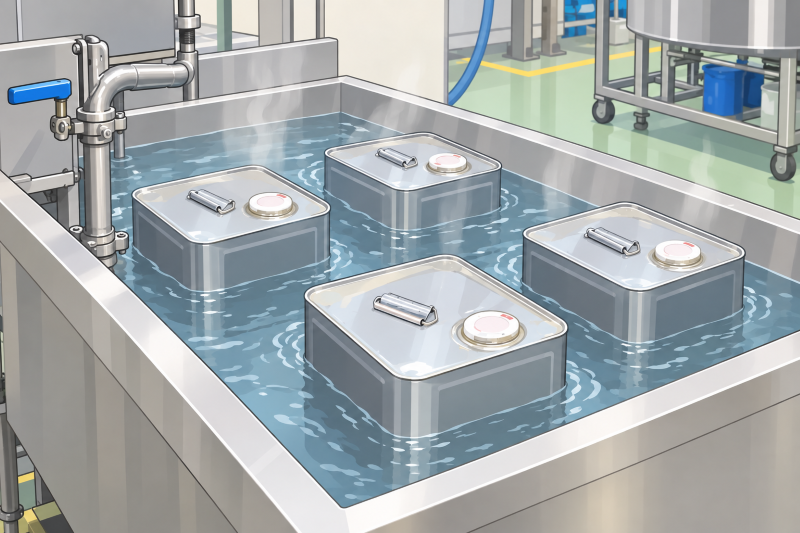
In factories handling highly viscous raw materials such as oils, fats, sugar solutions, and honey, there is a growing trend to introduce heaters as an alternative to water baths. Many factories say, "We've always done it this way," but in today's environment where labor-saving, energy-saving, and hygiene-enhancing measures are required, switching to electric heaters is often a shortcut to improving competitiveness.
This article clearly explains the challenges of using a water bath, why you should choose a heater as an alternative, how to select a product, and provides examples of implementation. We offer heaters suitable for all locations in food processing plants, so please read to the end!
Did you know that factory-style water baths can be replaced with alternatives?
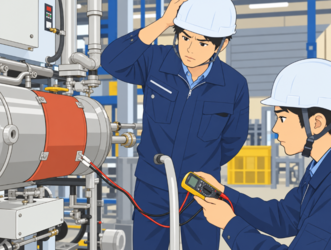
There are actually many workplaces that say, "We've always done it this way using a water bath..." However, with the increasing demand for automation, labor-saving, and energy-saving in manufacturing lines, the challenges unique to water baths are gradually becoming more significant.
Every morning, the setup process, temperature control, and hygiene management... Before you know it, these tasks are taking up a lot of your on-site staff's time and energy, aren't they? Let's take a closer look at this.
Why is a water bath inefficient? 4 reasons why you should consider using a heater as an alternative.
We tend to think of using a water bath as a gentle way to warm things up. However, in industrial production lines, it presents numerous challenges in terms of efficiency and cost.
Reason 1: It increases working time and labor costs.
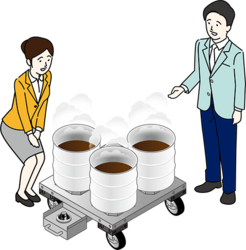
To begin using a water bath, you first need to boil a large amount of water. Just the preparation before starting work takes up a considerable amount of time. Moreover, constant monitoring is required during the heating process, and there are continuous manual tasks such as changing the water and carrying containers.
Have you ever thought, "I wish I could use this time for something else..."?
Reason ② Uneven heating leads to unstable quality.
When heating with water or steam, a temperature difference inevitably develops between the outside and the center of the container. Ingredients that are sensitive to temperature changes, such as oils and sugar solutions, will solidify in the pipes if the temperature is too low, and their quality and flavor will deteriorate if the temperature is too high. Maintaining this "just right temperature" is difficult with a water bath.
Reason ③ High risk from a hygiene management perspective
A water bath environment, where humidity and moisture are constantly present, is a breeding ground for mold and bacteria. Cleaning the hot water tank and draining the wastewater is also time-consuming, and the risk of secondary contamination from water droplets from the containers entering the production line cannot be completely eliminated.
Reason ④: Energy costs and environmental impact cannot be ignored.
The amount of energy required to boil water and maintain its temperature is actually quite substantial. With electricity and gas prices rising, this cost directly impacts factory operations. There are also issues with wastewater treatment costs and CO2 emissions, making this a point that needs to be reviewed in order to create an "environmentally friendly factory."
Why heaters are chosen as an alternative to water baths: Mechanism and benefits of implementation
You might be wondering, "So what kind of heater can be used as an alternative to a water bath?" Industrial heaters, which use electricity as a heat source, can be directly attached to pipes, tanks, or containers to control the temperature of the required location. "No water is used, no preparation is required, and it heats automatically"—this is the biggest difference from a water bath.
Direct heating significantly improves thermal efficiency.
Because electric heaters are used in close contact with the object being heated, there is no need to heat it indirectly through water, as in a water bath. Heat loss is minimal, and heating starts immediately upon switching it on. Startup time is dramatically reduced.
Let's compare the differences between a water bath and a heater...
| Comparison items | Water bath | Electric heater (alternative) |
|---|---|---|
| Startup time | It can sometimes take more than an hour. | Heating starts immediately when you switch it on. |
| temperature control | Tendency to rely on experience and prone to inconsistency | Automatic control maintains the set temperature. |
| hygiene management | Risk due to moisture and condensation. | Dry process reduces the risk of mold and bacteria. |
| Workload | Monitoring, replacement, and transportation are required. | It's all done with a single switch. |
| Space-saving | A hot water tank, bath, and space are required. | Compact design allows for direct attachment to piping and tanks. |
Four benefits of using a heater instead of a water bath
Benefit ① Cost reduction and energy saving
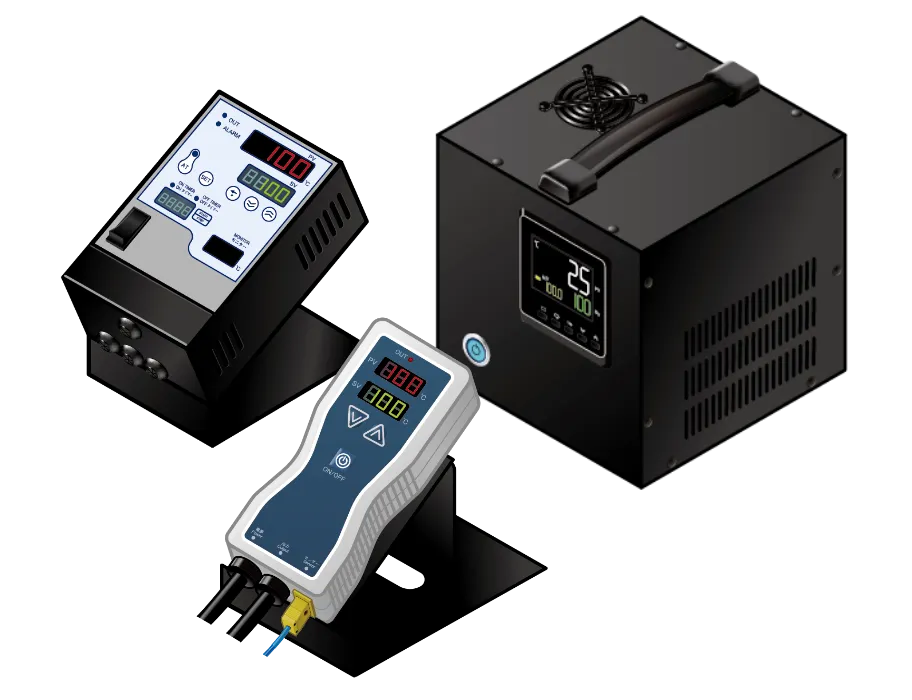
By combining it with temperature controllers such as the monoOne series, scheduled operation is possible, where power is supplied only when needed. Many factories are experiencing the benefits of reduced energy costs.
Benefit ② Stabilization of quality
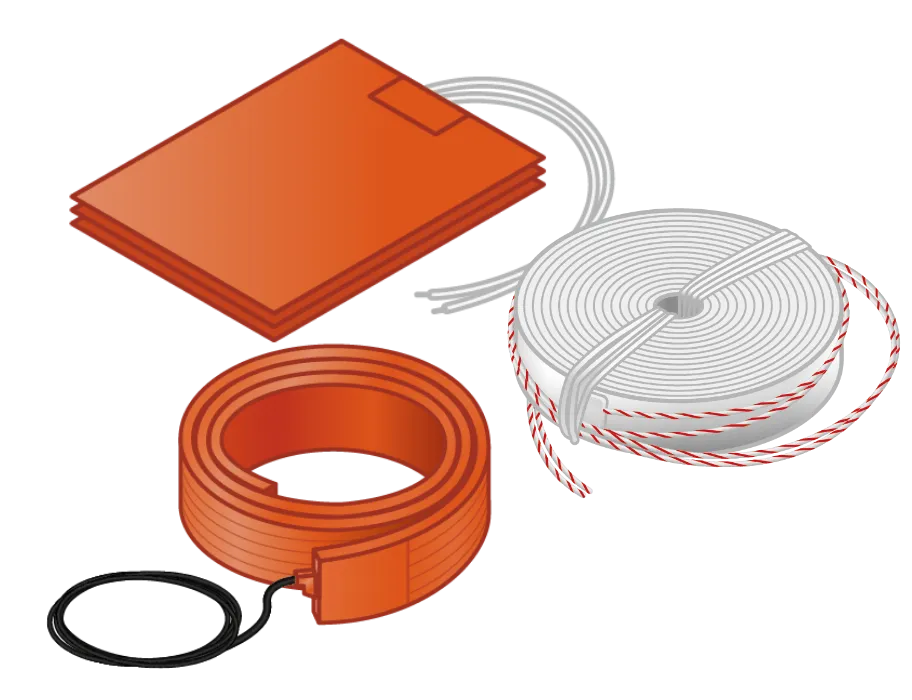
Silicone rubber heaters and pipe heaters excel at evenly heating the entire surface. PID control ensures precise temperature management automatically, preventing variations in product quality.
Benefit ③ Reduced workload
You'll be freed from the hassle of preparing and monitoring hot water, and dealing with blockages. This prevents reliance on specific individuals and creates an environment where operation can be safely managed by a small team.
Benefit ④ Improved hygiene levels
Since it doesn't use water, the risk of mold and bacteria growth is virtually zero. Many products are easy to attach and detach, making daily cleaning and maintenance a breeze.
How to choose an alternative heater for a water bath that suits your factory.
For those who are overwhelmed by the variety of heaters and don't know which one to choose, we'll introduce some of the main products categorized by their intended use. First, try to clarify these three points: "What do you want to heat?", "What shape is it?", and "What temperature do you need it to reach?".
① Choose by type of raw material and viscosity
For highly viscous ingredients such as fats, chocolate, sugar syrups, and honey, a type that "heats slowly over a wide area at a low temperature" is ideal. Rapid high-temperature heating can cause burning and quality deterioration, so the following products, which can be designed with low wattage density, are suitable.
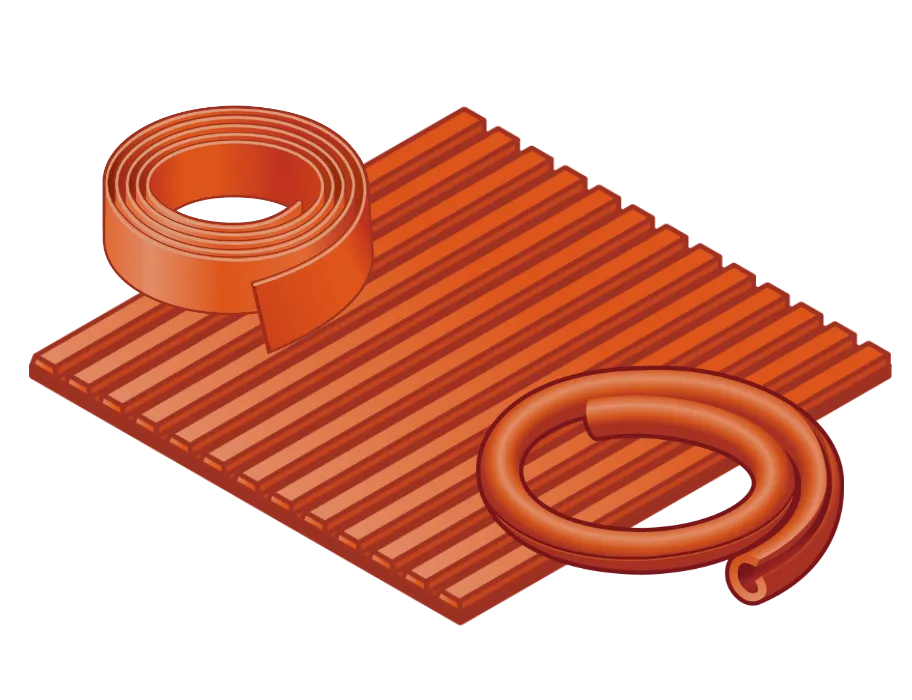
- Silicone rubber heater: Heat resistant up to 200°C, made to order from one piece. For even heating when attached tightly to the outside of tanks and pipes.
- Can heater: A type that wraps around 18-liter cans, pails , and drums to heat them. PSE compliant for safe use.
② Choose based on the shape of the area you want to heat.
- Straight pipes and round tanks: SUS band heaters are easy to use. They have a silicone sponge for high heat retention and simply tighten with screws. Compatible with diameters from φ30mm to φ600mm.
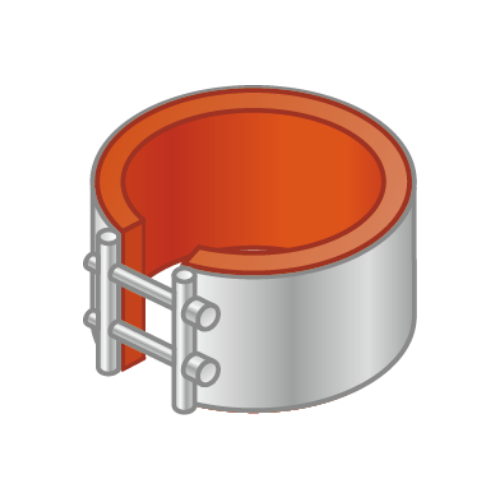 Check the product information for SUS band heaters.
- Drums and 18-liter cans: Drum heater (K-21W-PSE) or pail/18-liter can heater (K-11W-PSE). PSE compliant for peace of mind. Proven track record in keeping food warm and preventing solidification.
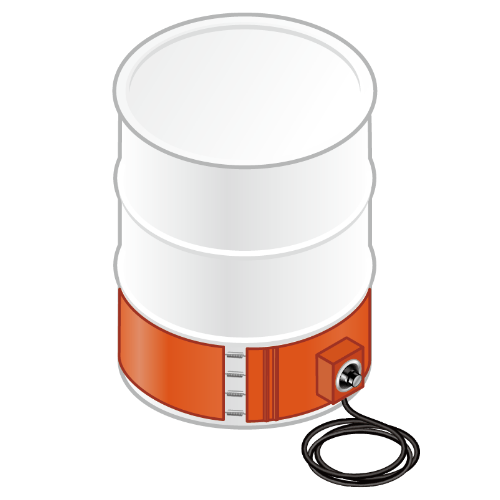 Check the product information for drum heaters.
- Drum/18-liter can: Bottom heater GOEMON-460. By heating the can from the bottom, it creates heat convection, enabling efficient heating and temperature retention. Energy-saving design that can heat up to 4 cans simultaneously.
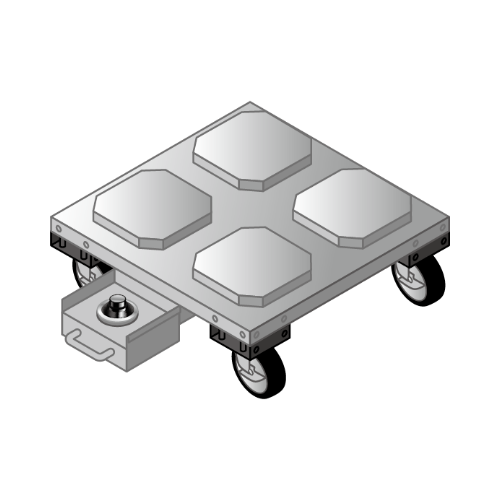 Check the product information for the GOEMON-460 bottom heater.
③ Choose based on the required temperature and control method.
Check the heater's rated temperature based on your target temperature, such as "maintaining room temperature," "keeping at 50°C," or "sterilizing at over 100°C." By combining it with the "monoOne® series" temperature controller, precise temperature control and overheat prevention are achieved through PID control, enabling safe unattended operation.
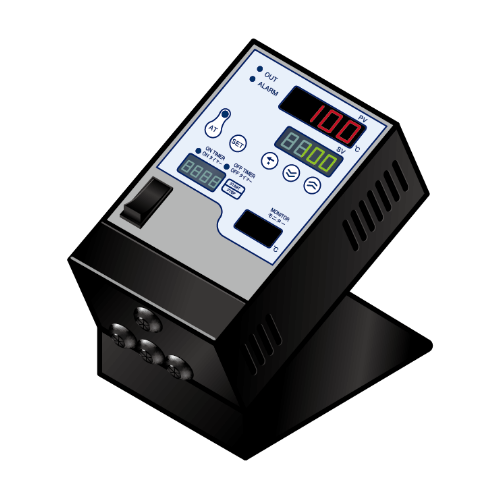 Check the product information for monoOne-120.
Case studies of implementation in actual workplaces
For those wondering, "Does it really work?", we'll introduce some examples of its actual use in factories.
In the case of Japanese confectionery ingredient tanks, silicone rubber heaters were installed in storage tanks for honey and sugar syrup, completely eliminating the need for a water bath. This resulted in reduced start-up time and energy savings.
This can be achieved without major equipment modifications during installation. A major advantage of electric heaters is that they can be retrofitted to existing equipment and tanks.
In addition, there were rare cases where the pipes were being heated using a water bath.
As a bonus, we would also like to introduce the following.
Oil and fat manufacturing line: Silicone rubber heaters for piping were retrofitted to the transfer piping for coconut oil, which tends to solidify in winter. Line stoppages due to blockages have been eliminated.
We can also accommodate requests to heat only a portion of the piping.
Frequently Asked Questions (FAQ)
Q1. How much would it cost to replace a water bath with a heater?
Prices vary depending on the size and specifications of the heater, but we offer a wide range of options, from simple models starting at tens of thousands of yen per meter of piping to custom-made products that cover the entire tank. Thanks to energy savings and reduced labor costs, many factories recoup their initial investment within six months to two years. Please feel free to contact us for more information!
Q2. Can a water bath alternative heater be installed as an add-on to existing equipment?
Yes, no problem! Silicone rubber heaters and pipe heaters can be easily retrofitted without changing the existing pipe layout. Many use Velcro or snap buttons, and some products can be installed without any tools.
Q3. Can maintenance be performed without specialized knowledge?
Generally, no daily maintenance is required. If you choose a waterproof and easy-to-clean model, on-site staff can remove parts and clean the mounting area.
Summary | For alternative heaters to water baths, please contact ThreeHigh.
While using a water bath is by no means a bad method, replacing it with an electric heater is the quickest way to meet the needs of those on the ground who want to heat food more efficiently, safely, and at a lower cost. The fact that heaters can simultaneously achieve cost reduction, energy saving, stable quality, and improved hygiene is why they are chosen as an alternative to water baths.
ThreeHigh offers heaters suitable for all locations in food processing plants, including pipes, tanks, drums, and 18-liter cans. We also accept custom orders starting from just one unit, so those who want to "try it out first" are more than welcome.
- Reona Suzuki
- We value warmth and strive to treat each customer with care. Through our efforts and friendly demeanor, we aim to deliver satisfaction and a sense of peace.